
English Communication Training for Nursing & Paramedical Institutes
Hospitals don't just hire on clinical skill. They shortlist from institutes whose graduates can communicate safely and clearly in English from day one.
- TESOL/TEFL certified trainers
- On-site or online
- Fortnightly reports
A nursing student tops every clinical exam — pharmacology, procedures, protocols. Then a recruiter at the placement interview asks them to explain a discharge plan to a patient in English, and they freeze.
The gap isn't that your students don't know English. It's the gap between the English they know and the English a hospital — or an overseas regulator like the NMC or AHPRA — expects at the bedside.
Why generic English training doesn't close it
A patient history, a shift handover, a worried family member, an OET role-play, a placement interview — each demands a register no general course teaches.
Grammar, vocabulary & conversational fluency
Useful foundations — but they stop exactly where the placement assessment begins. Knowing the words isn't the same as holding the conversation under pressure.
Clinical communication confidence
Take a patient history, explain a procedure in plain language, give a structured handover, and answer a placement-interview question — all with the same clarity.
What healthcare-specific English training actually covers
Five communication situations your students will face in placement assessments, licensing exams, and on the ward — built into every session.
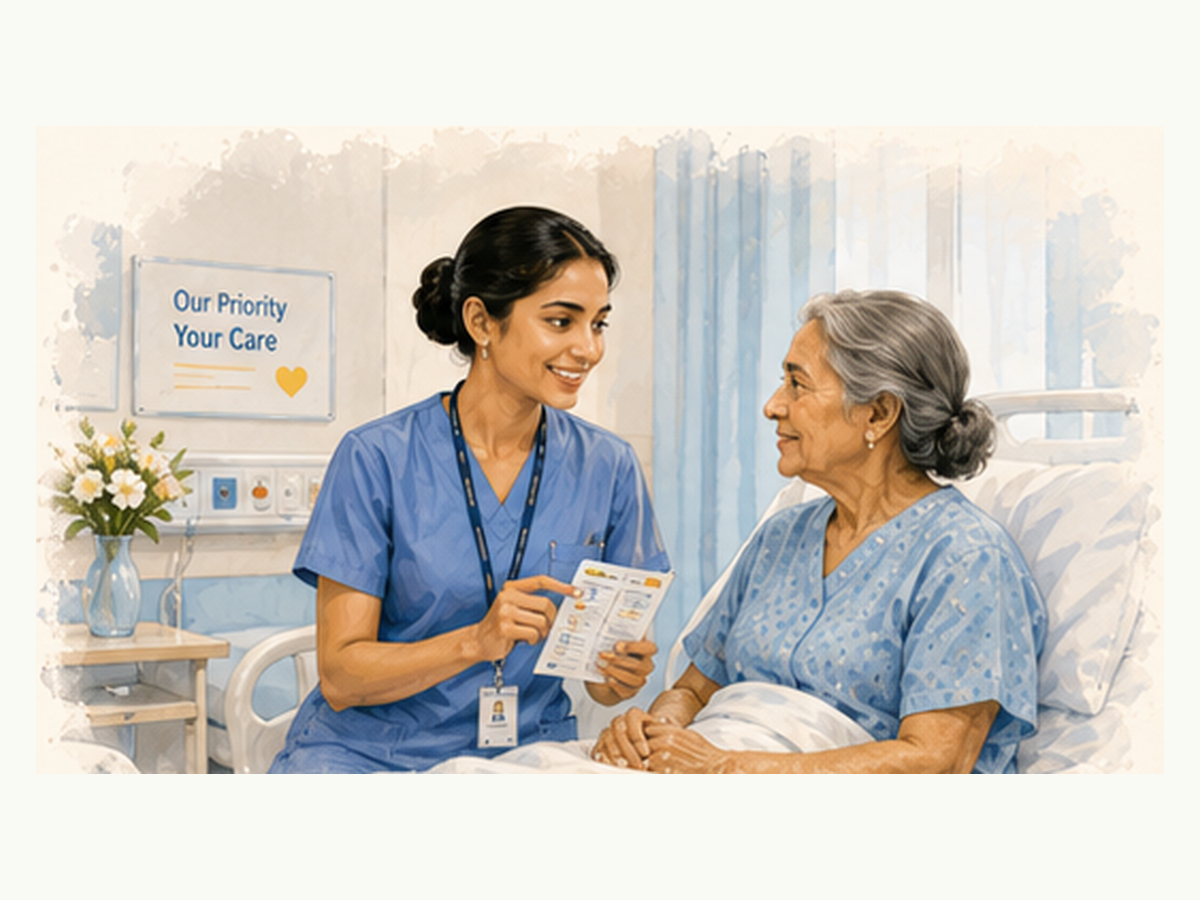
Patient communication & bedside English
Explain, reassure, and instruct patients — take a history, explain a procedure or medication in plain language, and respond to an anxious or confused patient with empathy. This is the communication that defines safe, patient-centred care, and it is exactly what hospital recruiters and OET examiners assess.

Clinical handover & inter-professional communication
The structured English of shift handovers, referrals, and communication with doctors and colleagues — where a missed or unclear detail can become a clinical error. Students who can give a clear, organised handover in English are immediately safer and more employable.
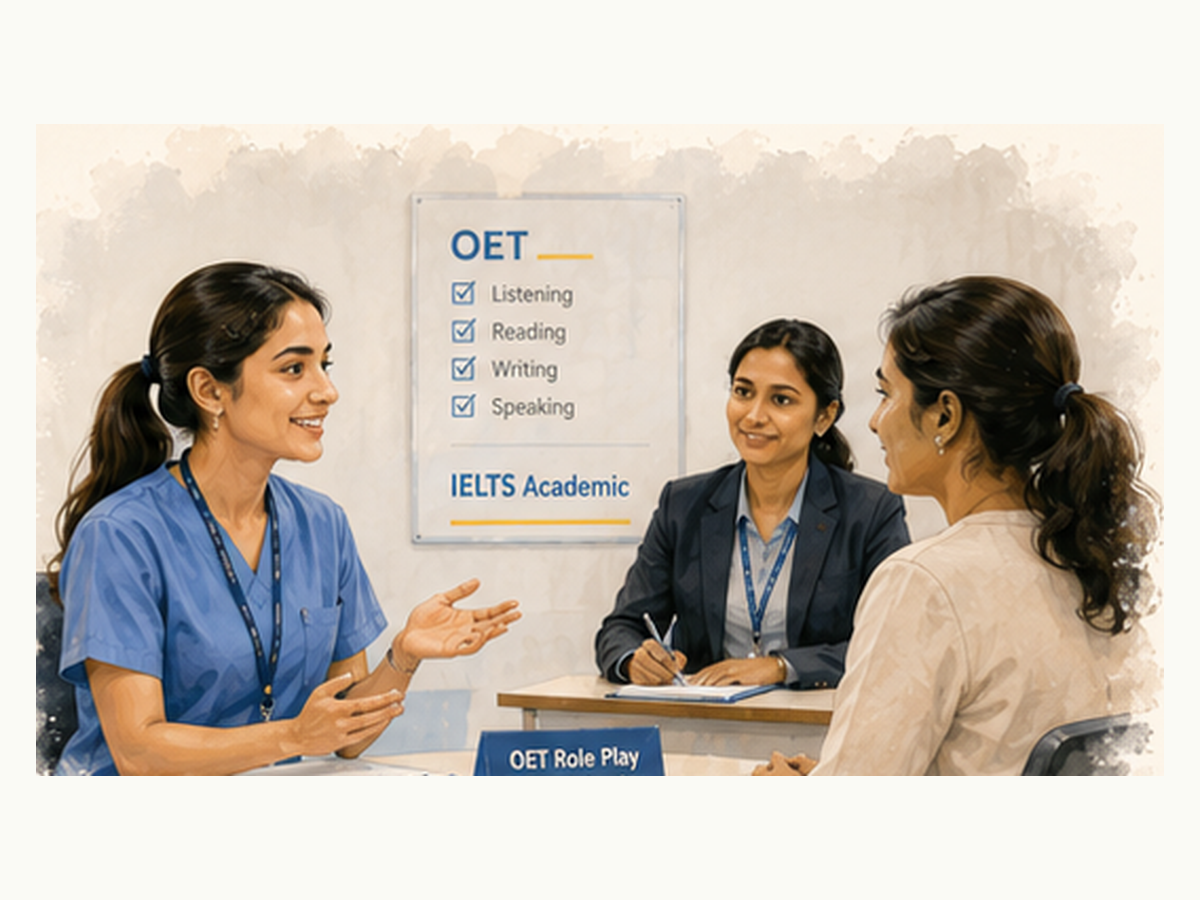
OET & IELTS preparation for overseas placement
Targeted preparation for the specific English exams overseas regulators require — OET's clinical role-plays and referral-letter writing, or IELTS Academic to the band each regulatory body demands. For institutes whose students aim for the UK, Australia, or New Zealand, this is the single requirement that stands between a qualified nurse and an overseas career.
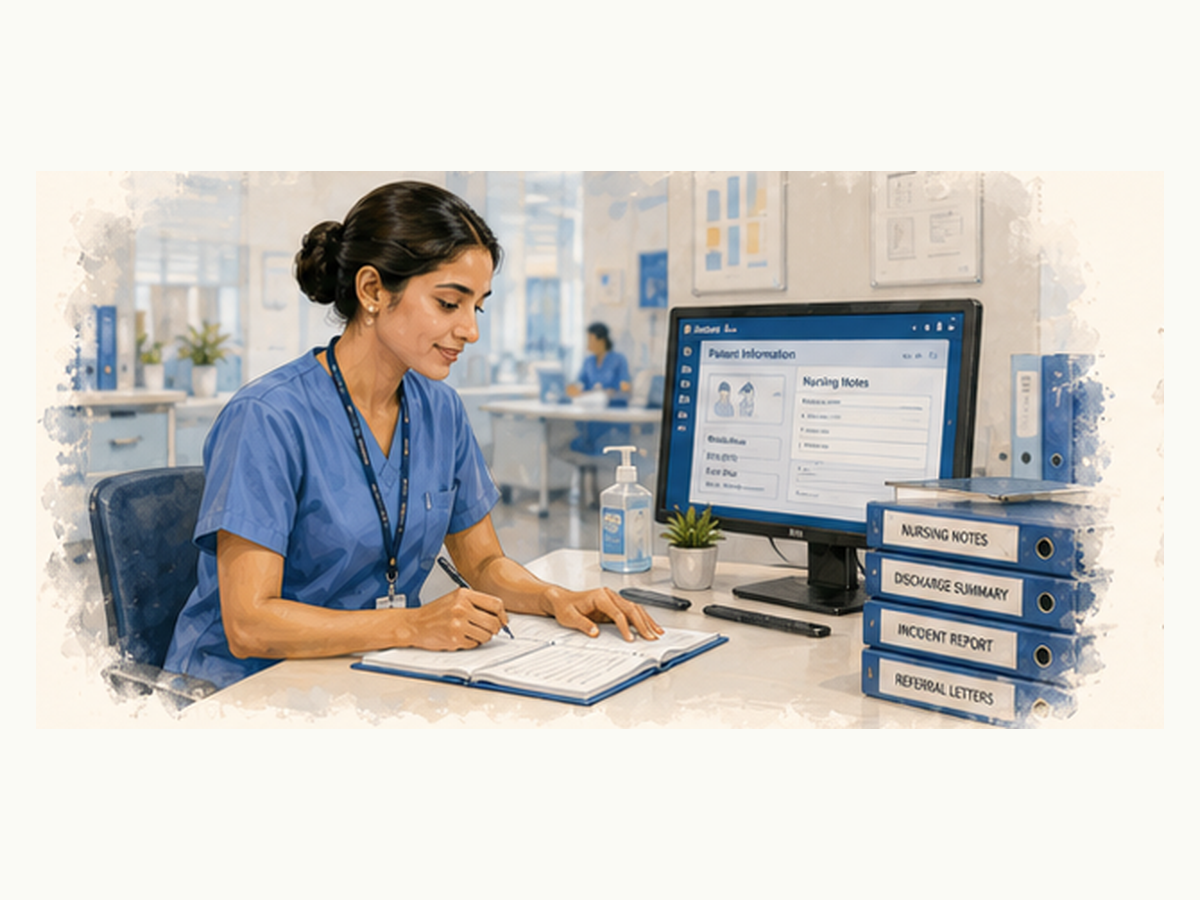
Medical documentation & written communication
Write nursing notes, discharge summaries, incident reports, and referral letters — clear, accurate, professional written communication that holds up in a clinical record. Strong written English is assessed in OET and is essential on any English-medium ward.

Placement interview & confidence under assessment
The specific English register and communication behaviours hospital and overseas recruiters assess — self-introduction, situational and scenario-based questions, and the composure to communicate clearly when being evaluated. Students who have practised in this register perform measurably better in placement and licensing assessments.
Inside an Unpyn healthcare session: What actually happens
Students take real clinical roles. The trainer plays the patient. The correction happens in the middle of something real.
What every session includes
- Scenario-based role-plays drawn from real placement, ward, and OET situations
- Real-life simulations — bedside, ward handover, patient consultation
- Vocabulary in context, never from a memorised list
- Mock tests modelled on OET role-plays and hospital placement interviews
- Practice sheets to reinforce each session between classes
- …and more, shaped around your batch's specific gaps
A real example from the room
The scenario: A post-operative patient is anxious and in pain, refusing their prescribed medication because they're worried about side effects — and they keep interrupting. The student nurse must reassure, explain, and gain cooperation, in English, without slipping into their first language.
The student picks up the scene from that corrected line. Two weeks later, in an OET Speaking role-play or a hospital placement interview, the empathetic, structured response is already a reflex.
Sample vocabulary — from the bedside to the discharge summary
Your students may already know the clinical procedure. Our job is to give them the English to communicate it safely, under pressure — in context, not in theory.
What this training delivers for your institute
The outcome your institute is measured on: Students who get placed — at home and abroad — not students who passed a grammar test.
Why The Unpyn Academy is the right partner for your institute
Built entirely from real clinical scenarios — bedside, ward, handover, consultation — not a generic business-English programme with medical words added. Our TESOL/TEFL certified trainers work as partners invested in your placement and overseas-licensing outcomes.
Clinical & exam-specific programme design
We build around the communication gaps specific to nursing and paramedical roles — and, for students headed overseas, around the exact OET or IELTS requirements of their target regulator.
Flexible delivery, on-site or online
Group workshops for student batches and 1:1 coaching tracks for students sitting OET or IELTS. On-site delivery is available for institutional programmes, scheduled around your academic calendar.
Fortnightly progress reports
Every two to four weeks, a report goes to your placement head or academic director — covering individual and batch-level improvement. Value measured and demonstrated, not assumed.
Commercial flexibility for your institution
Priced per session or as a full semester or batch engagement — whichever fits your calendar and budget. Our focus is on one outcome: Your students getting placed and cleared for the careers they trained for.
Institutions we've trained



Ready to build an English programme for your nursing or paramedical institute?
Tell us about your batch — the programme, the intake size, whether students are headed for domestic placement or overseas licensing, and where they're struggling — and we'll come back with a programme built specifically for your institute.