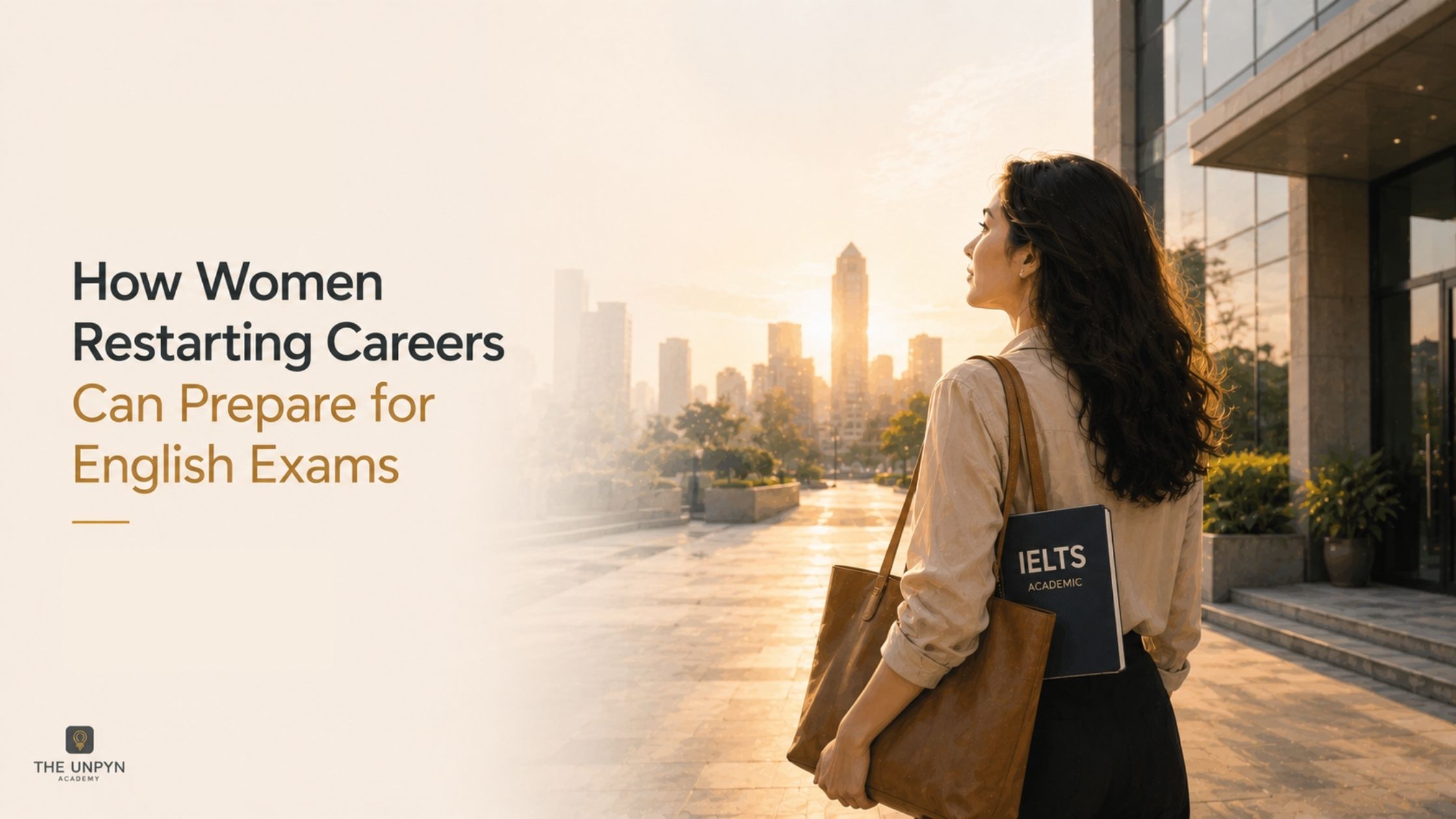
There's a particular kind of ambition that sits quietly for years. It doesn't disappear during the school runs, the hospital visits, the endless coordination of other people's lives. It waits. And at some point — when the children are older, when the circumstances shift, when something changes in you or around you — it surfaces again. Not as nostalgia. As a plan.
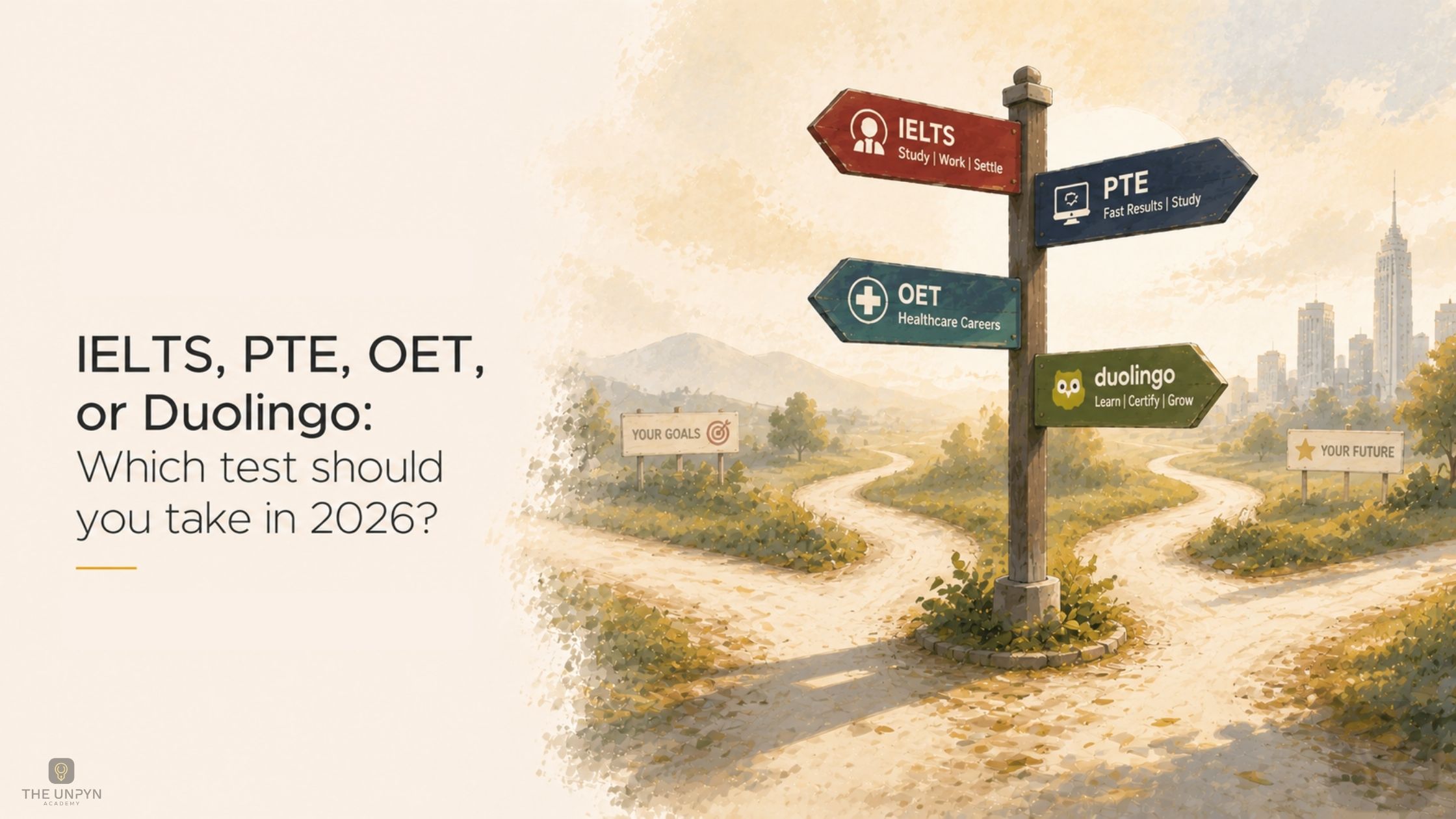
For many women in India restarting their careers in 2026, that plan has an English proficiency exam somewhere in it. IELTS for a move abroad. PTE for a work visa. Duolingo for a university admission. An exam that unlocks the next chapter — the job, the registration, the country, the version of life that was postponed but never abandoned.
This is about how to prepare for that exam — not the mechanics of it, but the shape of preparation that actually fits a life that's been doing something else for several years.
The Career Comeback Is Already Happening — English Is the Lever
India's workforce is changing its relationship with career breaks. TCS's Rebegin, Accenture's Career Reboot, Amazon's Rekindle, Salesforce's Return to Work India — these aren't niche initiatives. They're signals that experienced professionals returning after a break are being actively sought by organisations that have worked out the obvious: someone with a decade of prior experience plus the capability to manage complexity and competing demands is not a liability. They're a significant asset.
The barrier, for many women returning to work who want to go abroad or join global organisations, isn't experience or skill. It's documentation — specifically, an English proficiency score that proves, in a format immigration authorities and HR systems recognise, what anyone who has spoken with them for ten minutes already knows. An IELTS score doesn't teach you English. It certifies what you already have. The preparation is about learning the exam, not learning the language.
What the Gap Actually Costs You — and What It Doesn't
It doesn't affect your English. Language isn't a muscle that atrophies from disuse. If you were a proficient English user before your break, that proficiency is still there. It may feel cobwebbed. It isn't gone.
It doesn't affect your capacity for hard work. Anyone who has managed a household, a family, a medical crisis, or a move knows the ability to keep multiple things running under genuine pressure — without a manager, without performance reviews, without anyone telling you you're doing well. That capacity is one of the most valuable things you're bringing back.
It doesn't affect your life experience. IELTS Speaking asks you to talk about experiences, opinions, and complex ideas. The person who has been paying attention to the world has more material to draw on than a student who has been inside an institution.
What it does affect is your exam familiarity. The format needs to be learned. The question types need practising. The timing needs drilling until it's automatic. The band descriptors for Writing and Speaking need to be understood. That's the real preparation work — and it's learnable, at any age, with any amount of time away.
Why English Is Especially High-Stakes for This Transition
For most professionals returning to the workforce in India, English proficiency is assumed — demonstrated through conversation and the interview itself. No one asks for a certificate. But for women returning to careers that involve international moves, visa applications, professional registration abroad, or overseas academic programmes, the assumption isn't enough. The systems need a standardised, recognised, timestamped score that travels with an application through processes that never meet the person behind it.
This creates a specific kind of pressure: you know you can communicate in English; you're being asked to prove it in a format you've never encountered, under time pressure. That pressure is real — and entirely manageable, provided you understand the preparation isn't about learning English. It's about learning the exam.
Thinking about restarting but not sure where to begin? The free demo class is a no-pressure way to find out exactly where you stand.
Talk to a TrainerThe Specific Challenges — and What to Do About Each One
"I haven't studied formally in years. I don't know if I still can."
You can. Adult learning research is unambiguous: the capacity to learn doesn't peak in your 20s. What changes is the style, not the ability. Adults learn better when they understand the purpose, when new information connects to existing knowledge, and when they have control over the pace. IELTS preparation done well is exactly this kind of learning. The rust will lift within the first two or three weeks of consistent practice.
"My schedule is unpredictable. I can't commit to a fixed study plan."
You don't need one. You need a minimum effective structure — a few reliable pockets of time, used consistently. Twenty focused minutes in the early morning, a lunch break with the phone away, thirty minutes after the house quiets down. That's potentially 60–90 minutes a day without rearranging anything. The preparation that works fits into a real life.
"I'm worried about the Speaking test. I haven't spoken formally in years."
This anxiety dissolves faster than any other once you understand what Speaking assesses. IELTS and PTE Speaking don't reward polish — they reward fluency, coherence, and the ability to develop an idea clearly. Someone who has been negotiating, explaining, and advocating for years has all of these. What they need is practice in the specific format. That's a few weeks of deliberate practice with feedback. Not a rebuild. A recalibration.
"I've been out of the loop. I don't know what topics to expect."
IELTS and PTE cover general academic and current-affairs topics — education, technology, environment, health, work, society. Not insider topics. The vocabulary you need isn't specialist jargon; it's the ability to discuss ideas precisely and vary your word choices. Most women who read already have much of this vocabulary passive. The preparation activates it.
The Timeline That's Realistic for This Stage of Life
Eight to twelve weeks of structured preparation is typically enough for someone with a solid English foundation to reach Band 6.5–7.0 in IELTS, 58–65 in PTE, or a competitive Duolingo score — provided the preparation is targeted rather than scattered. "Targeted" means knowing your weakest sections from a baseline assessment, working on those specifically, getting feedback on Writing and Speaking, and taking at least one full mock test per fortnight. It does not mean studying every day without fail or waiting until you feel "ready" before booking — readiness comes from demonstrated progress, not more preparation.
A Note on Timing the Comeback
For women returning to careers with international components, the English exam is usually one of the first concrete steps — it has to happen before visa applications, registration, or admissions can proceed. This means it often falls in the window when everything else is still abstract. That timing is useful: preparing while the rest of the plan takes shape means you're ahead of the process rather than catching up to it. The women who handle the transition most smoothly treat the English exam as the first thing to close, not the last thing to worry about.